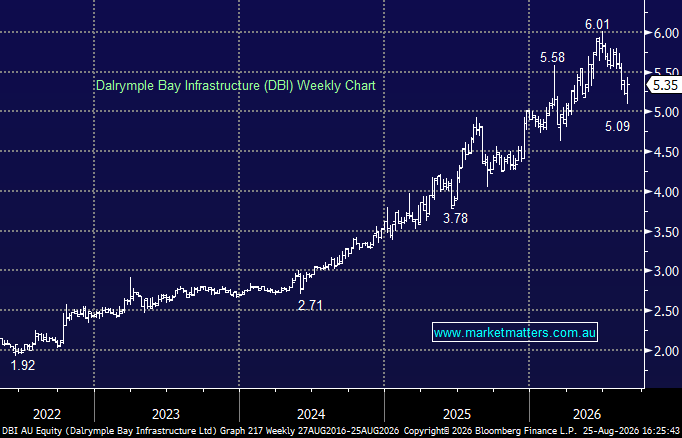
The ASX 200 rallied +0.5% on Monday to close just above the psychological 9100 level, but it wasn't all plain sailing with less than 55% of the main board closing higher. The story remained consistent on the sector front, with the gains by the materials (+61 points) minus the financials (-21 points) almost exactly equalling the day's +44-point net advance. The miners remain the driving force of the ASX, and the reason we’ve recently been outperforming the US, especially since the Treasury pledged support to try and rein in long-dated US bond yields. BHP Group (BHP) grabbed the headlines on Monday, posting new all-time highs, but there were plenty of standout performances amongst the big miners.
Last week saw Scott Bessent emerge as one of the most interventionist Treasury secretaries in financial markets in decades, putting his and the Treasury's credibility on the line in an effort to combat the damaging rise in US borrowing costs. On Wednesday, just two weeks after releasing its schedule for buying back older Treasury securities, the Treasury Department announced it would “at least double” its planned purchases of outstanding 10-year to 30-year debt.
The ASX 200 closed up +0.3% on Thursday with the resources, ably supported by tech, finally able to offset weakness from the banks, ending a six-day losing streak. On the day, the materials sector added 85-points to the ASX 200 while the financial sector caused a 57-point drag, big numbers when we consider the index only closed up +30-points. The polarisation in performance through August between the banks and miners has been almost unparalleled.
The US yield curve has been steepening sharply, with the gap between 2 and 30-year yields widening to ~111bp from ~69bp in late June. Importantly, this is a bear steepener: long-term yields have been rising much faster than short-term yields, reflecting growing investor concern around US deficits, sticky inflation, elevated oil prices and the enormous supply of government and corporate debt. At the same time, softer economic data and a Fed appearing to be on hold for now are keeping the 2-year yield relatively anchored.
The ASX 200 closed flat on Wednesday, experiencing a quiet day on the index level but anything but on the stock front following a bumper session for FY26 earnings. Only ~30% of the main board closed higher, but when CSL (+17%), BHP (+3%), and Goodman Group (+3%) dance to the same beat, adding 70 points to the ASX 200, it was always going to be a tough day for the bears, even if the crowd was in their camp.
The ASX 200 tried to reverse higher into lunchtime on Monday, only for steady, targeted selling throughout the afternoon to drag the index down by ~0.5%. On the stock & sector level, it was almost a carbon copy of August so far, with the miners again attempting to prop up an index weighed down by the flow-on effects of a softening housing market, where activity has ground to a near standstill since the May Budget. Consumer Discretionary, which we’ll revisit later, led the sell-off, falling 3%, while Financials and Real Estate also came under pressure, both declining more than 1%.
The latest US earnings season propelled the S&P 500 to fresh highs last week, delivering the strongest first-half earnings growth since the post-COVID rebound of 2021. Moving forward, consensus expects the 1H26 earnings boom to moderate but remain solidly positive, +10.5% in 1H27 and +15.0% in 1H28 (see orange below), suggesting the market anticipates a sustained, if more normalised, earnings expansion cycle rather than a one-off spike. If we look at the numbers in an even more granular fashion, it's not surprising US indices are posting fresh highs.
The ASX 200 ended a choppy session on Thursday down 0.2% with reporting again weighing on the index, although losses were fairly muted considering only 30% of the main board closed higher, and Commonwealth Bank (CBA) fell by over 2%. Yesterday saw the banks put in a very mixed performance, with ANZ adding ~16 points to the index while CBA more than offset the good work, taking over 20 points off the ASX 200. It was a refreshing change to see ANZ rally post its result, with the bank less exposed than CBA and Westpac to the current housing slowdown.
The ASX 200 struggled on Wednesday as reporting season weighed on sentiment and the index; it's only early days, but we’re seeing a very different story emerge locally compared to the recent season in the US. The S&P 500's 2Q26 earnings season is essentially complete and has been strong, while the ASX 200's August reporting season has only just begun, but with less than 10% of companies having faced the music, the early signs are not overly encouraging.
The ASX 200 advanced +0.2% on Tuesday, supported by the RBA leaving rates unchanged, as was expected. The accompanying rhetoric from Michelle Bullock also contained no hidden surprises, with the bond & FX markets hardly moving bar a brief relief spike when no hike was announced. The RBA remains understandably cautious as they weigh a soft property market versus sticky inflation. However, credit markets are slowly but surely painting a more supportive picture for stocks.
Last week saw Scott Bessent emerge as one of the most interventionist Treasury secretaries in financial markets in decades, putting his and the Treasury's credibility on the line in an effort to combat the damaging rise in US borrowing costs. On Wednesday, just two weeks after releasing its schedule for buying back older Treasury securities, the Treasury Department announced it would “at least double” its planned purchases of outstanding 10-year to 30-year debt.
The ASX 200 closed up +0.3% on Thursday with the resources, ably supported by tech, finally able to offset weakness from the banks, ending a six-day losing streak. On the day, the materials sector added 85-points to the ASX 200 while the financial sector caused a 57-point drag, big numbers when we consider the index only closed up +30-points. The polarisation in performance through August between the banks and miners has been almost unparalleled.
The US yield curve has been steepening sharply, with the gap between 2 and 30-year yields widening to ~111bp from ~69bp in late June. Importantly, this is a bear steepener: long-term yields have been rising much faster than short-term yields, reflecting growing investor concern around US deficits, sticky inflation, elevated oil prices and the enormous supply of government and corporate debt. At the same time, softer economic data and a Fed appearing to be on hold for now are keeping the 2-year yield relatively anchored.
The ASX 200 closed flat on Wednesday, experiencing a quiet day on the index level but anything but on the stock front following a bumper session for FY26 earnings. Only ~30% of the main board closed higher, but when CSL (+17%), BHP (+3%), and Goodman Group (+3%) dance to the same beat, adding 70 points to the ASX 200, it was always going to be a tough day for the bears, even if the crowd was in their camp.
The ASX 200 tried to reverse higher into lunchtime on Monday, only for steady, targeted selling throughout the afternoon to drag the index down by ~0.5%. On the stock & sector level, it was almost a carbon copy of August so far, with the miners again attempting to prop up an index weighed down by the flow-on effects of a softening housing market, where activity has ground to a near standstill since the May Budget. Consumer Discretionary, which we’ll revisit later, led the sell-off, falling 3%, while Financials and Real Estate also came under pressure, both declining more than 1%.
The latest US earnings season propelled the S&P 500 to fresh highs last week, delivering the strongest first-half earnings growth since the post-COVID rebound of 2021. Moving forward, consensus expects the 1H26 earnings boom to moderate but remain solidly positive, +10.5% in 1H27 and +15.0% in 1H28 (see orange below), suggesting the market anticipates a sustained, if more normalised, earnings expansion cycle rather than a one-off spike. If we look at the numbers in an even more granular fashion, it's not surprising US indices are posting fresh highs.
The ASX 200 ended a choppy session on Thursday down 0.2% with reporting again weighing on the index, although losses were fairly muted considering only 30% of the main board closed higher, and Commonwealth Bank (CBA) fell by over 2%. Yesterday saw the banks put in a very mixed performance, with ANZ adding ~16 points to the index while CBA more than offset the good work, taking over 20 points off the ASX 200. It was a refreshing change to see ANZ rally post its result, with the bank less exposed than CBA and Westpac to the current housing slowdown.
The ASX 200 struggled on Wednesday as reporting season weighed on sentiment and the index; it's only early days, but we’re seeing a very different story emerge locally compared to the recent season in the US. The S&P 500's 2Q26 earnings season is essentially complete and has been strong, while the ASX 200's August reporting season has only just begun, but with less than 10% of companies having faced the music, the early signs are not overly encouraging.
The ASX 200 advanced +0.2% on Tuesday, supported by the RBA leaving rates unchanged, as was expected. The accompanying rhetoric from Michelle Bullock also contained no hidden surprises, with the bond & FX markets hardly moving bar a brief relief spike when no hike was announced. The RBA remains understandably cautious as they weigh a soft property market versus sticky inflation. However, credit markets are slowly but surely painting a more supportive picture for stocks.
Check your email for an email from [email protected]
Subject: Your OTP for Account Access
This email will have a code you can use as your One Time Password for instant access
Verication email sent.
Check your email for an email from [email protected]
Subject: Your OTP for Account Access
This email will have a code you can use as your One Time Password for instant access
!
Invalid One Time Password
Please check you entered the correct info, please also note there is a 10minute time limit on the One Time Passcode
To reset your password, enter your email address
A link to create a new password will be sent to the email address you have registered to your account.
Market Matters members receive daily market reports, real-time trade alerts, full access to 5 portfolios and dynamic company data.
Choose how you'd like to proceed:
We have a range of membership options to suit your needs and budget, why not join today and get unlimited access to the premium Market Matters service.